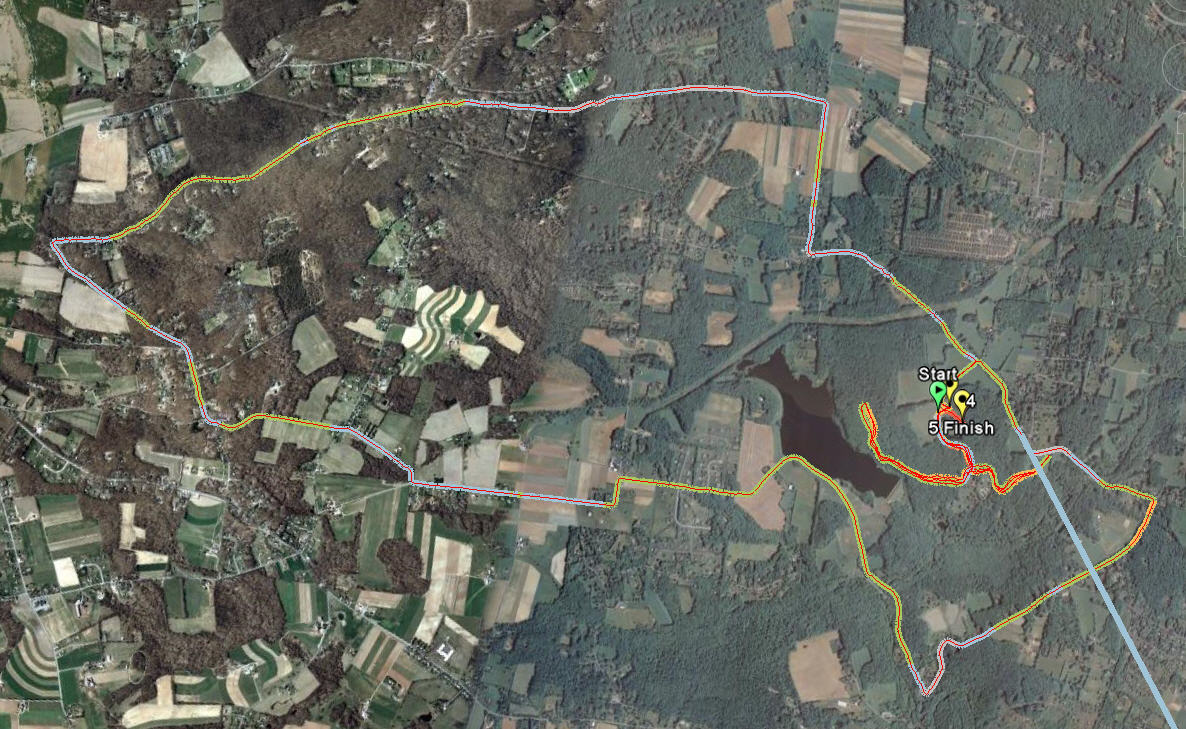
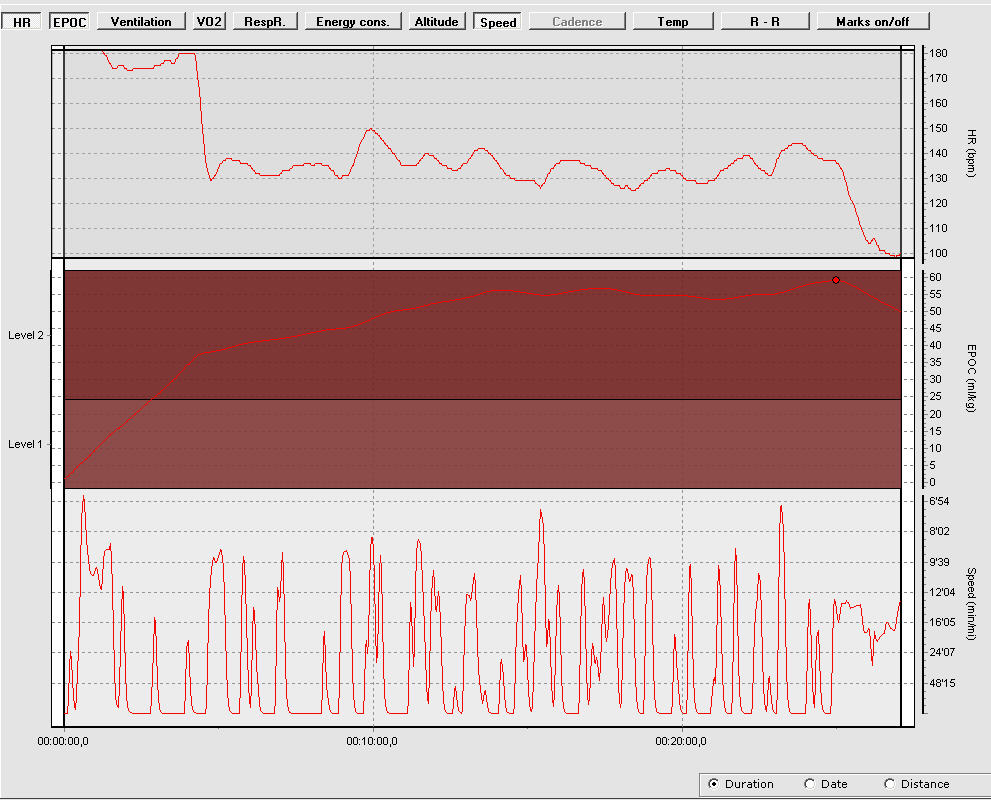
I have posted about my unpleasant experience with Suunto GPS pod on Suunto Discussions and asked for help from other users. It was recommended to me to give the GPS pod little longer to get better satellite lock and put the GPS pod on the same arm as the watch. I did all this prior to my long run this Sunday and the results were much better this time. As you can see from this picture.

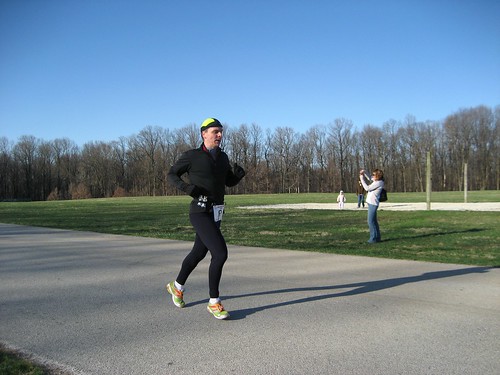
While the pacing info is not as good as from calibrated foot pod it is certainly much better than what I have seen in my first attempt. I have not lost connection between the watch and the GPS pod in the whole 2 hours of the exercise which is good. But what really bothered me was that the pace on the display of the watch was pretty much unusable. But I'm getting little ahead of myself. Let me start with this - I had a long run scheduled for Easter Sunday and I put it off until afternoon. I figured that there will be quite a bit of traffic on the roads I usually run so I took the running to Lehigh Valley Parkway. It is a nice park with great trails on rolling terrain. I thought it will be better for my knees and ankles than the roads. I wanted to test the GPS pod, but I also had second watch RS800cx with S3 foot pod to validate the pace. Well that was the plan anyways. When I was getting ready for the run the RS800cx would not link up with the foot pod (turned out to be a dead battery). Well great I thought, now I'll need to pace based on this GPS unit that I do not really know all that well. After about a mile of glancing at the pace it was clear to me that pacing with this GPS pod will not work. Instead I relied on the perceived exertion and my heart rate. Main reason for that was that the immediate pace in the park was jumping between 9 minute mile and 12 minute mile on my steady pace effort that I would estimate was more around 8:30 per mile. I was not that far off with my estimate - the pace was actually 8:20 which I figured out when I got home. The funny part is that while the pace jumps all over the place the distance gets recorded accurately so you can validate the pacing after the run. This is actually good exercise in listening to your body. I noticed that I often get too hung up on what the watch tells me and listen to my body less than I should.
After all the workout turned out to be a great success - not only did I do the work. I also validated that my perceived exertion is pretty much spot on - I had to run 60 minutes at 8:10 - 9:10 per mile which turned out to be about 8:20 based on the distance. Then the plan called for me to pick up the pace to 7:15 - 7:30 for 30 minutes - which turned out to be 7:33 and then I had 6 pickups to faster than 5k pace with 2 minute recoveries and 5 minutes cool down. After I got home I found out that I did quite well even without the watch telling me how fast I ran. And to some degree it was much better workout - I kept listening to my body and pushed through the rough spots during the session. You know, like when you feel the muscle fatigue that slows you down and you push through it and 100 meters later it feels ok again. I'm thinking about using the GPS pod for this type of workout again to see how my sense of pace improves over time.
What looked like a messed-up workout in the beginning turned out to be a great session. It was excellent practice in pacing without the feedback from the watch. "If life gives you lemons make lemonade," and as Ron White said on radio when I was heading over to the Lehigh Valley Parkway "make sure to find someone with vodka to have a party!".








 Posts
Posts

